


What Is Web 2.0? Definition and SEO Relevance

Web 2.0 is the stretch of the web where visitors stopped just reading and started publishing. Blogs, wikis, forums, comments, and social platforms all come from that shift. If you want to know what is Web 2.0 and why SEO people still talk about it, the short answer is this: user generated content decides a large share of what gets published, indexed, and linked to.
What Is Web 2.0? The Meaning in Plain Terms
The Web 2.0 meaning comes down to the participatory web, sometimes called the read-write web. Visitors stopped being an audience and started contributing. They post, comment, review, tag, and share.
The term took off after a 2004 brainstorm between Tim O'Reilly and Dale Dougherty's team at O'Reilly Media and MediaLive International. O'Reilly laid out the ideas in his 2005 essay, What Is Web 2.0.
Web 2.0 in one line: the web as a two-way conversation instead of a one-way broadcast.
One caveat from Martin Fowler: O'Reilly's principles describe rather than prescribe. Web 2.0 is a change in how people use the web. It is not a software version you can install.
Web 1.0 vs Web 2.0: From Static Pages to User Generated Content
Early sites were static web pages. A publisher wrote them, and you read them. Web 2.0 flipped that model. Here is the contrast at a glance.
| Web 1.0 | Web 2.0 | |
|---|---|---|
| Publishing model | One-way, publisher to reader | Two-way, many to many |
| User role | Reader | Reader, author, reviewer |
| Typical examples | Hand-coded company pages, directories | Blogs, wikis, YouTube, social networks |
| Technology | Static HTML | Dynamic pages, CMS platforms, APIs |
| SEO angle | Few pages, rarely updated | Fresh user generated content, constant new URLs |
Comments, forums, and the social web are the everyday face of this shift. Every reply and review is a small act of publishing, and that is what separates Web 2.0 from what came before.
Web 2.0 vs Web3: Two Different Ideas
People mix these up all the time. Web3 is a separate idea built around decentralization. Web 2.0 is about participation on platforms and publishing tools. Treat them as different topics, because a page about one rarely answers questions about the other.
Web 2.0 Examples: Blogs, Wikis, and CMS Platforms
Blogs are the classic Web 2.0 format. A content management system such as WordPress lets anyone publish without writing code, which is exactly the participation O'Reilly described. Common Web 2.0 sites include:
- YouTube (user-uploaded video, comments, sharing), so yes, YouTube is a Web 2.0 tool
- Wikipedia and other wikis
- WordPress blogs
- Social networks such as Facebook and Reddit
- Community forums
Why Web 2.0 Matters for SEO
I see this daily with the blogs I work on: pages that get updated, discussed, and reviewed give a search engine more to crawl and more to understand. Here is why that matters.
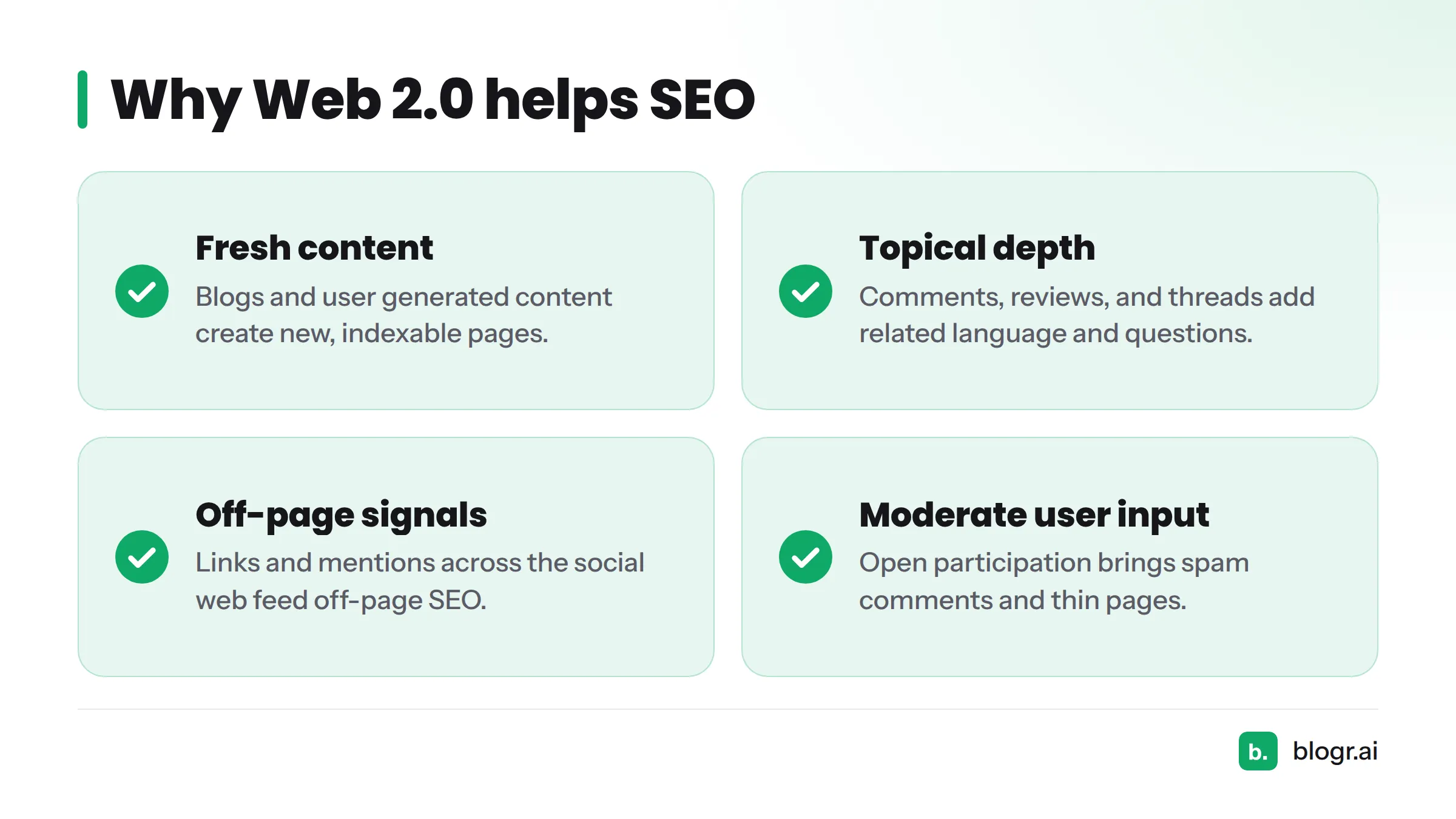
- Fresh content: blogs and user generated content create new, indexable pages. A web crawler can find and revisit them.
- Topical depth: comments, reviews, and community threads add related language and questions to a page.
- Off-page signals: links and mentions earned across the social web feed off-page SEO.
The tradeoff is quality control. Open participation also brings spam comments and thin pages, so sites that accept user input need moderation.
Web 2.0 and Publishing Automation via APIs
Here is the practitioner payoff. Modern CMS platforms expose a REST API. WordPress documents its endpoints in the REST API Handbook, so software can create, edit, and publish posts programmatically. Push a draft to that API and a live post appears, with no editor session needed.
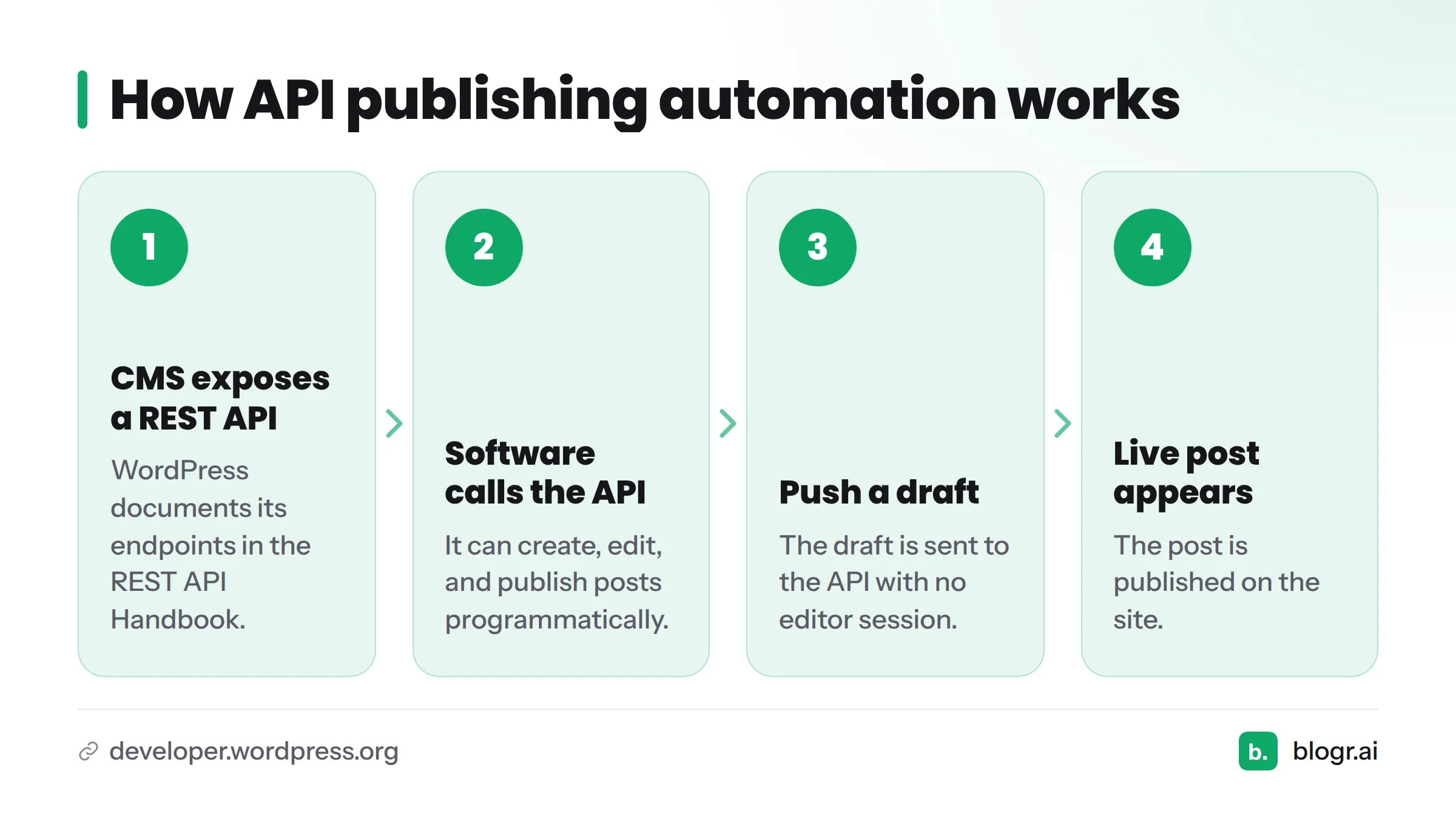
That is how publishing automation works today, and it descends directly from the Web 2.0 idea of the web as a platform. Check the available CMS publishing integrations to see what blogr.ai connects to, including WordPress.
Related Terms
- Web 1.0: the static, read-only web
- Web3: the decentralized web, a different concept
- User generated content: material created by visitors
- Participatory web: another name for Web 2.0
- Backlinks: links from other sites that point to yours
- Content management system: software for publishing without code
Browse the full SEO glossary for more plain-English definitions from blogr.ai. Next step: read our guide on starting a blog for SEO.
Written by SEO practitioners and reviewed on a fixed schedule.