


Search Engine Definition: How Search Engines Work

A search engine is software that finds, stores and orders web content so it can answer a query. You type a few words, and the engine returns a ranked list of pages. Google and Bing are the best-known search engine examples.
Definition: A search engine is a program that discovers web pages, stores them in a searchable database, and ranks them to answer what a person types.
If you came here asking "what is a search engine?", the short answer is above. The rest of this entry covers how search engines work, what the search engine definition looks like in computer terms, and where you can see each stage for your own site.
What a Search Engine Does in Plain Terms
A search engine collects pages from across the web, organizes them in a database, and picks the ones most likely to answer your question. Type "best running shoes" and the engine does not comb the live web at that moment. It searches its own stored copy.
In computer terms, that makes a search engine an information retrieval system: it builds an index ahead of time so answers come back in a fraction of a second.
Two terms will come up again and again:
- Query: the words or phrase a person types into the search box.
- Search engine results page (SERP): the page the engine returns, with organic links and other features.
Search engine vs browser
People mix these up all the time. A browser, such as Chrome or Safari, opens web pages. A search engine helps you find them. You can use a browser to visit Google, but the browser and Google are different things.
Crawl, Index, Rank: The Three Stages
Google Search Central describes Google Search in three stages. Picture a loop: crawl, then index, then rank, then the SERP. That crawl index rank sequence is the core of how search engines work.
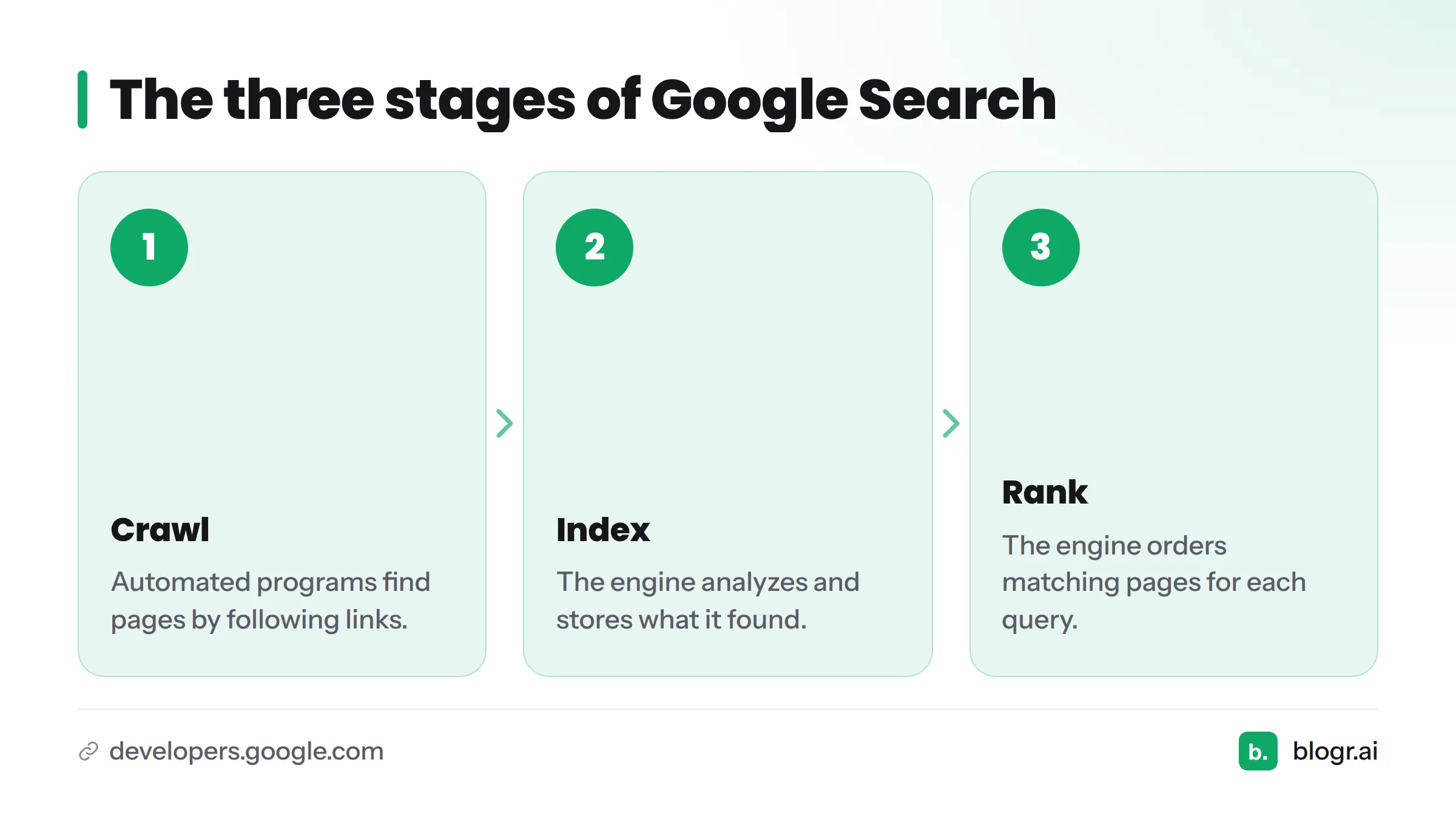
- Crawl: automated programs find pages by following links.
- Index: the engine analyzes and stores what it found.
- Rank: the engine orders matching pages for each query.
Let's break down each stage, and the Search Console report that matches it.
Crawl: How Search Engines Discover Pages
A web crawler is a bot that fetches pages and follows their links to find more. Discovery comes first. A page the engine never finds cannot appear anywhere.
If you own a site, open Google Search Console. Its Crawl stats report is designed to show how Google's crawlers have requested your site.
Index: What Gets Stored and Why It Matters
After a crawl, the engine decides what to keep. A page stored in the search index becomes eligible to appear in results. Eligible does not mean guaranteed.
The Page indexing report is designed to show which URLs Google has indexed and which it has not, along with reasons for the ones left out.
Rank: How Results Get Ordered
When someone runs a Google search, the engine compares the query to indexed pages and orders them using ranking signals. Those signals are the inputs an engine weighs to judge relevance and quality. For a classic example of one such idea, see what PageRank is.
The Performance report shows impressions, clicks and average position, broken down by query. For a walkthrough, read how to read Google Search Console data.
What Site Owners Can and Cannot Know About Ranking
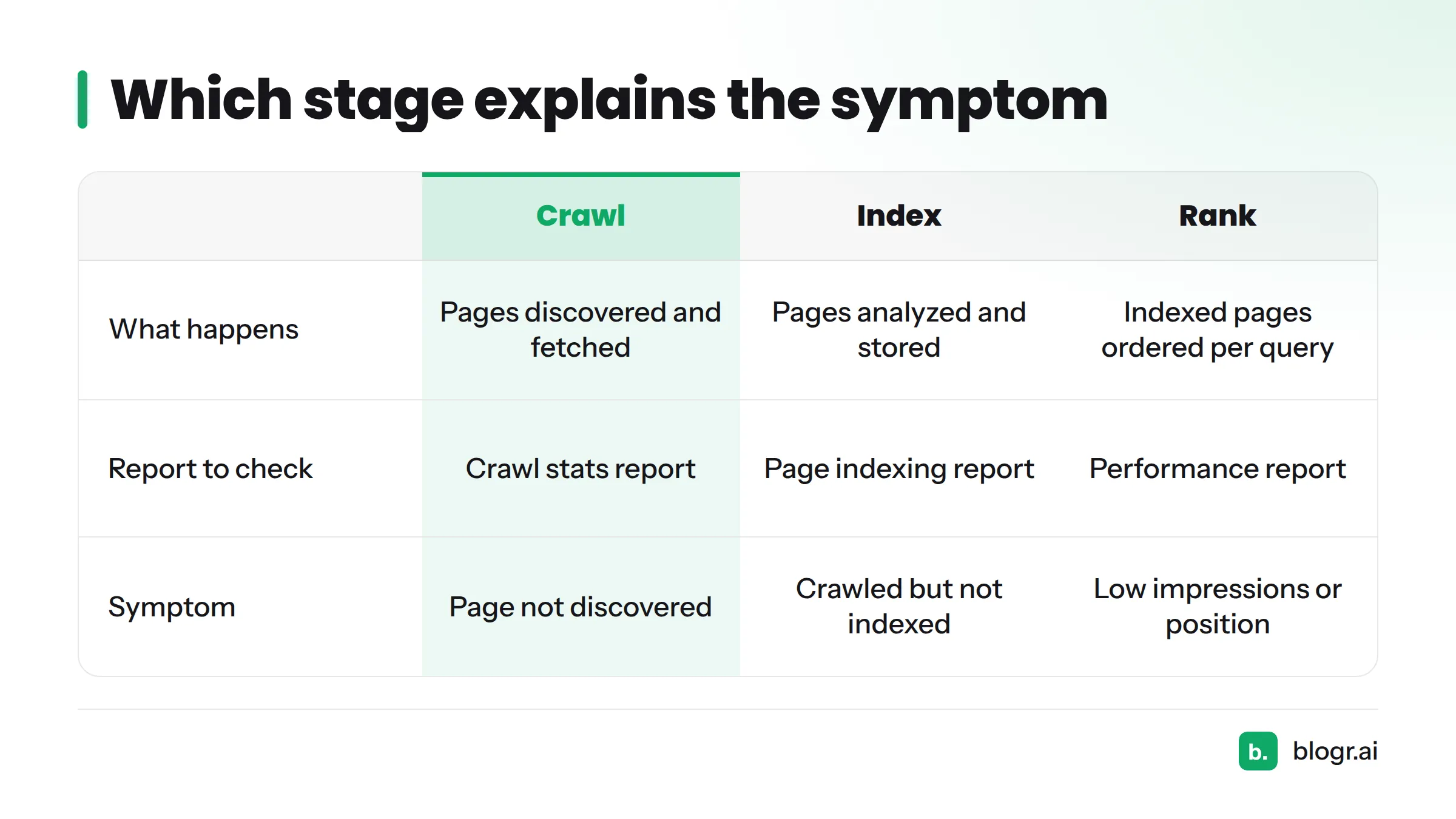
I treat the table below as a rule of thumb, not a diagnosis. It points you to the stage that most plausibly explains a symptom.
| Stage | What happens | Report designed to show it | Symptom that points here |
|---|---|---|---|
| Crawl | Pages are discovered and fetched | Crawl stats report | Page not discovered |
| Index | Pages are analyzed and stored | Page indexing report | Page crawled but not indexed |
| Rank | Indexed pages are ordered per query | Performance report | Indexed, but low impressions or position |
What we can't know: Ranking internals are not public in full. No outside party can say exactly why one page outranks another, and no page is guaranteed to be crawled, indexed or ranked.
Quick Answers
What is a search engine? Software that finds, stores and ranks web pages to answer a query.
Browser vs search engine? A browser opens pages. A search engine finds them.
What are some search engine examples? Google, Bing and DuckDuckGo.
What are the types of search engines? Most people mean general web engines like Google and Bing. Others focus on a narrower job, such as privacy-minded search (DuckDuckGo) or searching inside a single site or store.
Which is most used? Google is widely reported as the most used, but check a live source before quoting any share figure.
Next Steps in the SEO Glossary
Browse the full SEO glossary for terms like the search index, organic search results and AI search visibility. If you want a system that turns these reports into publishing decisions, see blogr.ai's SEO content automation features on the blogr.ai homepage.